Bentonite for Flame-Retardant Systems: A Functional Mineral Synergist for Safer Materials 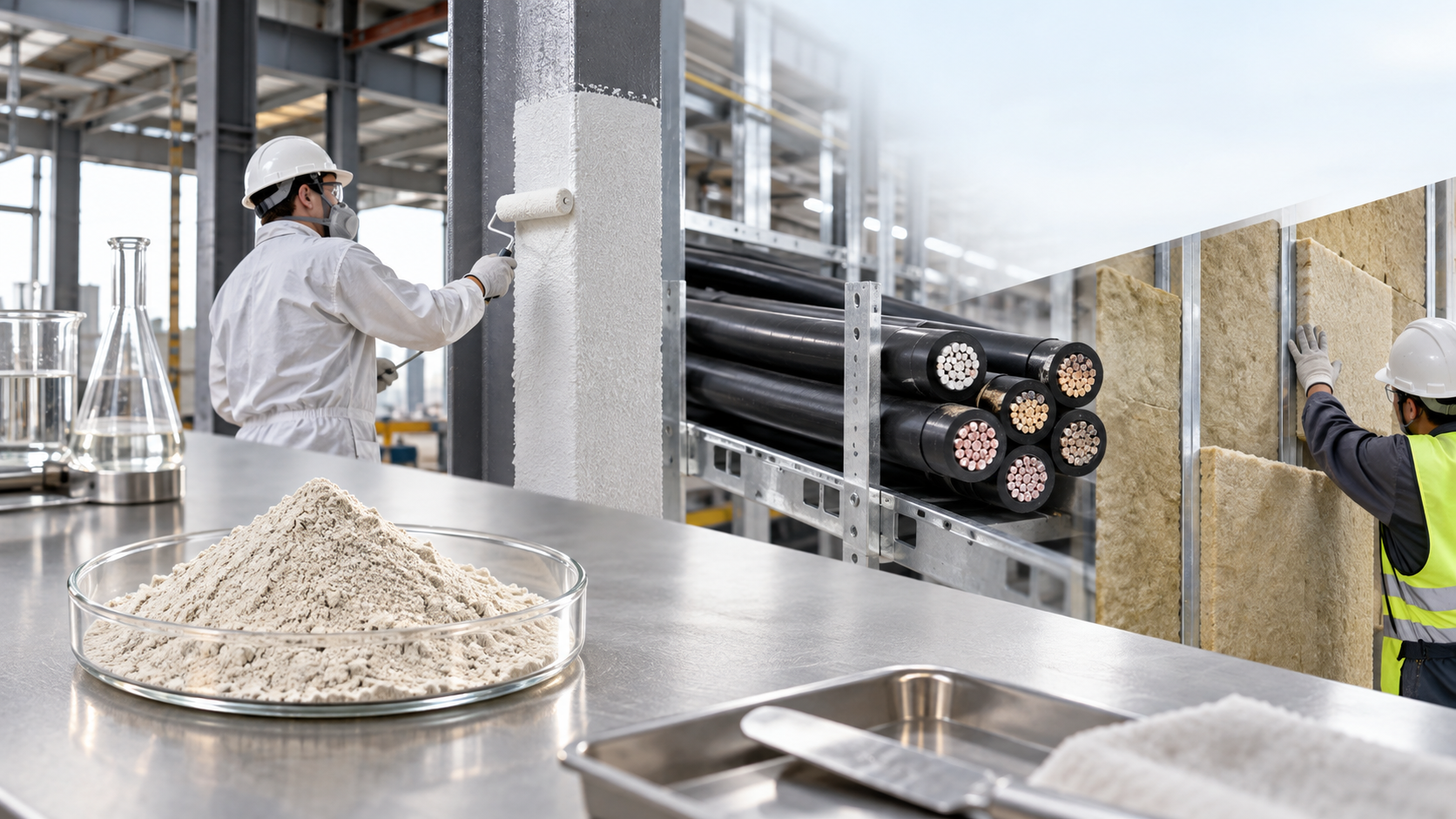
Flame-retardant materials are widely used in plastics, rubber, coatings, textiles, cable compounds, construction boards and sealants. In many formulations, the main flame-retardant package may include aluminum hydroxide (ATH), magnesium hydroxide (MDH), phosphorus-based flame retardants, expandable graphite or intumescent components.
Bentonite is not normally used as a stand-alone flame retardant. However, its layered mineral structure, thermal stability and barrier-forming ability can make it a valuable functional synergist in selected flame-retardant systems.
Why Bentonite Can Support Flame RetardancyBentonite is mainly composed of montmorillonite, a layered silicate mineral with a high aspect ratio and a large surface area. When properly dispersed in a polymer, coating or rubber matrix, the mineral layers can help improve the material’s resistance to heat and mass transfer.
During combustion, well-dispersed bentonite may contribute to:
Formation of a more compact protective char layer
Reduced heat transfer into the substrate
Slower migration of combustible volatile gases
Lower oxygen diffusion toward the burning surface
Improved cohesion of the carbonized layer
Better anti-dripping performance in some polymer systems
Reduced cracking or shrinkage in protective coatings
These mechanisms can complement the primary flame-retardant additives and improve overall fire performance.
Bentonite in Intumescent Flame-Retardant Coatings Intumescent coatings expand under fire exposure and form an insulating char layer that protects steel, wood or other substrates. The stability and integrity of this expanded char are critical.
Fine bentonite can be used as a reinforcing mineral component in intumescent coating formulations. Its platelet structure may help strengthen the char skeleton and reduce the tendency of the expanded layer to crack, collapse or detach under high temperatures.
In water-based fire-retardant coatings, bentonite may also assist with rheology control, anti-settling performance and storage stability. The suitable grade should be selected according to the coating system, pigment loading, binder type and target viscosity.
Applications in Plastics and Rubber Bentonite can be considered for flame-retardant plastic and rubber compounds, particularly where mineral reinforcement and barrier effects are desired.
Potential application areas include:
Cable and wire insulation compounds
PVC products EVA and polyolefin compounds
Rubber sheets, belts and seals
Construction membranes
Automotive interior components
Flame-retardant masterbatch systems
For non-polar polymers, natural sodium bentonite often has limited compatibility.
Organophilic bentonite or surface-treated clay may provide better dispersion in solvent-based, oil-based or non-polar polymer systems. Good dispersion is essential: poorly dispersed agglomerates may reduce the expected performance benefits.
Bentonite and Expandable Graphite SystemsExpandable graphite is an effective intumescent flame-retardant material, but its expanded char can sometimes be fragile. Bentonite may be used together with expandable graphite to help improve char compactness and structural strength.
In this type of formulation, bentonite can contribute a mineral barrier effect while graphite creates the expansion and insulation structure. The exact ratio must be optimized through laboratory testing, since excessive mineral loading may affect mechanical properties, processing behavior or expansion efficiency.
Selecting the Right Bentonite GradeThe appropriate bentonite depends on the formulation and application method.
Application system Recommended bentonite direction
Water-based fire-retardant coating High-purity natural sodium bentonite or rheology-grade inorganic bentonite
Solvent-based coating Organophilic bentonite compatible with the solvent polarity
PVC, EVA, rubber or cable compound Fine bentonite, modified bentonite or organoclay depending on polymer compatibility
Intumescent coating Fine particle-size bentonite with stable rheology and good dispersion
Expandable graphite compound Fine, low-impurity bentonite for char reinforcement and barrier support
Important technical indicators may include particle size, moisture, swelling capacity, cation exchange capacity, rheological behavior, color, impurity level and compatibility with the complete formulation.
Formulation Testing Is EssentialBentonite should be evaluated as part of the complete flame-retardant package rather than assessed alone. Its performance can be influenced by the resin, flame-retardant type, pigment system, dispersant, processing method and dosage.
Key tests may include:
Limiting Oxygen Index (LOI) UL-94 vertical burning test
Cone calorimeter test
Smoke density test
Thermogravimetric analysis (TGA)
Char expansion and char integrity evaluation
Mechanical properties and processing behavior
Coating viscosity, storage stability and anti-settling performance
A small laboratory screening program is usually the most reliable way to determine the optimum grade and dosage.
Hermano Bentonite Solutions for Flame-Retardant FormulationsHERMANO NEW MATERIALS supplies natural bentonite, high-performance inorganic bentonite and organophilic bentonite for industrial applications. For flame-retardant systems, we can recommend suitable grades according to your formulation type, including water-based coatings, solvent-based coatings, rubber, plastic compounds and intumescent systems.
We can support customers with technical data, sample evaluation and grade selection based on the intended application.
If you are developing flame-retardant coatings, polymer compounds or fire-protection materials, please contact us with your formulation system, resin type, current additives and target performance. We will help identify a suitable bentonite solution for your evaluation.


